
Engineering Physics, Engineering Chemistry and the humanities — life skills, professional communication, ethics, economics and the Constitution of India — taught into every first-year engineering programme at TIST.
The Department of Science & Humanities aims to advance students’ application abilities and foster innovative thinking, communication skills and integrity, built on a strong foundation of the fundamentals of basic subjects.
Rather than running a degree programme of its own, the department teaches Engineering Physics, Engineering Chemistry and humanities subjects — Life Skills, Professional Communication, Professional Ethics, Business Economics and the Constitution of India — into the first years of every B.Tech programme at TIST, and maintains its own Physics and Chemistry laboratories.
“The Department is envisioned to address the twin goals of professional excellence namely Soft Skills and Hard Skills, leading to all-round development and application efficacy in the professional domain of the technocrat.”
| Course Code | Course Name |
|---|---|
| GAPHT121 | PHYSICS FOR INFORMATION SCIENCE |
| GBPHT121 | PHYSICS FOR ELECTRICAL SCIENCE |
| GZPHT121 | PHYSICS FOR PHYSICAL SCIENCE AND LIFE SCIENCE |
| GXCYT122 | CHEMISTRY FOR INFORMATION SCIENCE AND ELECTRICAL SCIENCE |
| GCCYT122 | CHEMISTRY FOR PHYSICAL SCIENCE |
| UCPWT127 | HEALTH AND WELLNESS |
| UCHUT128 | LIFE SKILLS AND PROFESSIONAL COMMUNICATION |
| UCHUT346 | ECONOMICS FOR ENGINEERS |
| GAPHT121 PHYSICS FOR INFORMATION SCIENCE (Common to Group A) | ||
|---|---|---|
| Sl. No. | Course Outcomes |
Bloom's Knowledge Level (KL) |
| CO1 | Explain electrical conductivity and Superconductivity | K2 |
| CO2 | Explain the behaviour of matter in the atomic and subatomic level through the principles of quantum mechanics | K2 |
| CO3 | Apply the fundamentals of Semiconductor Physics in engineering | K3 |
| CO4 | Describe the behaviour of semiconductor materials in semiconductor devices | K2 |
| CO5 | Apply basic knowledge of principles and theories in physics to conduct experiments | K3 |
| GBPH T121 PHYSICS FOR ELECTRICAL SCIENCE (Common to Group B) | ||
|---|---|---|
| Sl. No. | Course Outcomes |
Bloom's Knowledge Level (KL) |
| CO1 | Explain the fundamentals of Semiconductor Physics | K2 |
| CO2 | Describe the behaviour of semiconductor materials in semiconductor devices | K2 |
| CO3 | Explain Superconductivity and basic theory of dielectrics | K2 |
| CO4 | Apply the comprehended knowledge about laser and fibre optics in various engineering applications | K3 |
| CO5 | Apply basic knowledge of principles and theories in physics to conduct experiments | K3 |
| GZPH T121 PHYSICS FOR PHYSICAL SCIENCE AND LIFE SCIENCE (Groups C & D) | ||
|---|---|---|
| Sl. No. | Course Outcomes |
Bloom's Knowledge Level (KL) |
| CO1 | Describe the basic principles and properties of laser and optic fibers. | K2 |
| CO2 | Describe the phenomena of interference and diffraction of light. | K2 |
| CO3 | Describe the behaviour of matter in the atomic and subatomic level through the principles of quantum mechanics. | K2 |
| CO4 | Apply the knowledge of waves and acoustics in non-destructive testing and in acoustic design of buildings. | K3 |
| CO5 | Apply basic knowledge of principles and theories in physics to conduct experiments. | K3 |
| GxCYT122 CHEMISTRY FOR INFORMATION SCIENCE AND ELECTRICAL SCIENCE (Common to Group A & B) | ||
|---|---|---|
| Sl. No. | Course Outcomes |
Bloom's Knowledge Level (KL) |
| CO1 | Explain the Basic Concepts of Electrochemistry and Corrosion to explore the possible applications in various engineering fields. | K2 |
| CO2 | Describe the use of various engineering materials in different industries. | K2 |
| CO3 | Apply appropriate analytical techniques for the synthesis and characterization of various engineering materials. | K3 |
| CO4 | Outline various water treatment and waste management methods. | K2 |
| GCCYT122 CHEMISTRY FOR PHYSICAL SCIENCE (Group C) | ||
|---|---|---|
| Sl. No. | Course Outcomes |
Bloom's Knowledge Level (KL) |
| CO1 | Describe the use of various engineering materials in different industries. | K2 |
| CO2 | Explain the Basic Concepts of Electrochemistry and Corrosion to Explore the Possible Applications in Various Engineering Fields. | K2 |
| CO3 | Use appropriate analytical techniques for different engineering materials. | K3 |
| CO4 | Outline various water treatment and waste management methods. | K2 |
| UCPWT127 HEALTH AND WELLNESS (Common to all Branches) | ||
|---|---|---|
| Sl. No. | Course Outcomes |
Bloom's Knowledge Level (KL) |
| CO1 | Explain the different human body systems and describe various types of physical activities along with methods to measure and quantify these activities | K2 |
| CO2 | Explain how to maintain or improve health and wellness through psychological practices, dietary habits, and sports activities. | K2 |
| CO3 | Discuss about common hypokinetic disorders and musculoskeletal disorders, and describe the importance of leading a healthy lifestyle through the practice of yoga and abstaining from addictive substances. | K2 |
| CO4 | Explain the basics of first aid and describe common sports injuries. | K2 |
| UCHUT128 LIFE SKILLS AND PROFESSIONAL COMMUNICATION (Common to all Branches) | ||
|---|---|---|
| Sl. No. | Course Outcomes |
Bloom's Knowledge Level (KL) |
| CO1 | Develop the ability to know & understand oneself, show confidence in one’s potential & capabilities, set goals and develop plans to accomplish tasks | K5 |
| CO2 | Develop the ability to communicate and connect with others, participate in groups/teams, empathise, respect diversity, be responsible and understand the need to exercise emotional intelligence. | K5 |
| CO3 | Develop thinking skills, problem-solving and decision-making skills. | K5 |
| CO4 | Develop listening, reading, writing & speaking skills, ability to comprehend & successfully convey any idea, and ability to analyze, interpret & effectively summarize textual, audio & visual content. | K6 |
| CO5 | Develop the ability to create effective presentations through audio-visual mediums with the use of technology tools and initiate effective use of social media platforms & tech forums for content delivery and discussions | K6 |
| CO6 | Initiate profile-building exercises in line with the professional requirements, and start networking with professionals/academicians | K6 |
| UCHUT346 ECONOMICS FOR ENGINEERS | ||
|---|---|---|
| Sl. No. | Course Outcomes |
Bloom's Knowledge Level (KL) |
| CO1 | Understand the fundamentals of various economic issues using laws and learn the concepts of demand, supply, elasticity and production function | K5 |
| CO2 | Develop decision making capability by applying concepts relating to costs and revenue, and acquire knowledge regarding the functioning of firms in different market situations.. | K5 |
| CO3 | Outline the macroeconomic principles of monetary and fiscal systems and national income. | K5 |
| CO4 | Make use of the possibilities of value analysis and engineering, and take investment decisions through capital budgeting techniques. | K6 |
| Course Code | Course Name |
|---|---|
| CYT100 | ENGINEERING CHEMISTRY |
| HUN101 | LIFE SKILLS |
| CYL120 | ENGINEERING CHEMISTRY LAB |
| EST110 | ENGINEERING GRAPHICS |
| PHT 100 | ENGINEERING PHYSICS A |
| PHT110 | ENGINEERING PHYSICS B |
| HUN102 | PROFESSIONAL COMMUNICATION |
| EST 100 | ENGINEERING MECHANICS |
| EST 102 | PROGRAMMING IN C |
| HUT200 | PROFESSIONAL ETHICS |
| PHL120 | ENGINEERING PHYSICS LAB |
| MCN202 | CONSTITUTION OF INDIA |
| HUT300 | INDUSTRIAL ECONOMICS & FOREIGN TRADE |
| CYT100 ENGINEERING CHEMISTRY | ||
|---|---|---|
| Sl. No. | Course Outcomes | Level |
| CO1 | Express the basic concepts of electrochemistry and corrosion for possible applications in various engineering fields | L2 |
| CO2 | Describe various spectroscopic techniques like UV-Visible, IR, NMR and applications | L2 |
| CO3 | Apply the knowledge of analytical methods for characterizing a chemical mixture or a compound including SEM for surface characterization of nanomaterials. | L3 |
| CO4 | Summarize the basics of stereochemistry and polymers for engineering applications. | L2 |
| CO5 | Illustrate various types of water treatment methods for treating wastewater | L2 |
| HUN101 LIFE SKILLS | ||
|---|---|---|
| Sl. No. | Course Outcomes | Level |
| CO1 | Define and Identify different life skills required in personal and professional life | L1 |
| CO2 | Develop an awareness of the self and apply well-defined techniques to cope with emotions and stress | L3 |
| CO3 | Explain the basic mechanics of effective communication and demonstrate these through presentations | L5 |
| CO4 | Take part in group discussions | L4 |
| CO5 | Use appropriate thinking and problem solving techniques to solve new problems | L3 |
| CO6 | Understand the basics of teamwork and leadership | L2 |
| CYL120 ENGINEERING CHEMISTRY LAB | ||
|---|---|---|
| Sl. No. | Course Outcomes | Level |
| CO1 | Demonstrate the experimental skills generated from understanding different techniques of quantitative chemical analysis, in various applications of Engineering. | L2 |
| CO2 | Develop skills relevant in synthesizing organic polymers and in using TLC for the identification of drugs. | L3 |
| CO3 | Apply the use of modern spectroscopic techniques for analyzing and interpreting the IR spectra and NMR spectra of some organic compounds. | L3 |
| CO4 | Utilize the ability in understanding, explaining & using instrumental techniques for chemical analysis. | L3 |
| CO5 | Design scientific experiments along with accurate recording and result evaluation. | L3 |
| CO6 | Perform as a member of a team for effective communication, advanced learning and understanding how chemistry addresses social, economic and environmental problems. | L3 |
| EST110 ENGINEERING GRAPHICS | ||
|---|---|---|
| Sl. No. | Course Outcomes | Level |
| CO1 | Draw the projection of points and lines located in different quadrants | L1 |
| CO2 | Prepare multiview orthographic projections of objects by visualizing them in different positions | L3 |
| CO3 | Draw sectional views and develop surfaces of a given object | L1 |
| CO4 | Prepare pictorial drawings using the principles of isometric and perspective projections to visualize objects in three dimensions. | L3 |
| CO5 | Convert 3D views to orthographic views | L2 |
| PHT 100 – ENGINEERING PHYSICS A | ||
|---|---|---|
| Sl. No. | Course Outcomes | Level |
| CO 1 | Compute the quantitative aspects of waves and oscillations in engineering systems | L2 |
| CO2 | Apply the interaction of light with matter through interference, diffraction and identify these phenomena in different natural optical processes and optical instruments. | L3 |
| CO3 | Analyze the behaviour of matter in the atomic and subatomic level through the principles of quantum mechanics to perceive the microscopic processes in electronic devices. | L4 |
| CO4 | Classify the properties of magnetic materials and apply vector calculus to static magnetic fields and use Maxwell’s equations to diverse engineering problems | L2 |
| CO5 | Analyze the principles behind various superconducting applications, explain the working of solid state lighting devices and fibre optic communication system | L4 |
| PHT110 ENGINEERING PHYSICS B | ||
|---|---|---|
| Sl. No. | Course Outcomes | Level |
| CO 1 | Compute the quantitative aspects of waves and oscillations in engineering systems | L2 |
| CO2 | Apply the interaction of light with matter through interference, diffraction and identify these phenomena in different natural optical processes and optical instruments | L3 |
| CO3 | Analyze the behaviour of matter in the atomic and subatomic level through the principles of quantum mechanics to perceive the microscopic processes in electronic devices | L4 |
| CO4 | Apply the knowledge of ultrasonics in non-destructive testing and use the principles of acoustics to explain the nature and characterization of acoustic design and to provide a safe and healthy environment | L3 |
| CO5 | Apply the comprehended knowledge about laser and fibre optic communication systems in various engineering applications | L3 |
| HUN102 PROFESSIONAL COMMUNICATION | ||
|---|---|---|
| Sl. No. | Course Outcomes | Level |
| CO1 | Develop vocabulary and language skills relevant to engineering as a profession | L3 |
| CO2 | Analyze, interpret and effectively summarize a variety of textual content | L3 |
| CO3 | Create effective technical presentations | L3 |
| CO4 | Discuss a given technical/non-technical topic in a group setting and arrive at generalizations/consensus | L3 |
| CO5 | Identify drawbacks in listening patterns and apply listening techniques for specific needs | L3 |
| CO6 | Create professional and technical documents that are clear and adhering to all the necessary conventions | L3 |
| EST 100 ENGINEERING MECHANICS | ||
|---|---|---|
| Sl. No. | Course Outcomes | Level |
| CO 1 | Recall principles and theorems related to rigid body mechanics | L1 |
| CO 2 | Identify and describe the components of system of forces acting on the rigid body | L3 |
| CO 3 | Apply the conditions of equilibrium to various practical problems involving different force system | L3 |
| CO 4 | Choose appropriate theorems, principles or formulae to solve problems of mechanics. | L3 |
| CO 5 | Solve problems involving rigid bodies, applying the properties of distributed areas and masses | L3 |
| EST 102 PROGRAMMING IN C | ||
|---|---|---|
| Sl. No. | Course Outcomes | Level |
| CO1 | Develop algorithm and flowchart for a computational problem to find its solution. | L3 |
| CO2 | Develop C programs with branching and looping statements, which uses Arithmetic, Logical, Relational or Bitwise operators. | L3 |
| CO3 | Write readable C programs with arrays, structure or union for storing the data to be processed | L2 |
| CO4 | Develop a readable multi-function C program by using recursion if required, to find the solution to the computational problem | L3 |
| CO5 | Write readable C programs which use pointers for array processing and parameter passing | L2 |
| HUT200 PROFESSIONAL ETHICS | ||
|---|---|---|
| Sl. No. | Course Outcomes | Level |
| CO1 | Understand the core values that shape the ethical behaviour of a professional. | L2 |
| CO2 | Build a good character and follow an ethical life. | L3 |
| CO3 | Explain the role and responsibility in technological development by keeping personal ethics and legal ethics | L2 |
| CO4 | Solve moral and ethical problems through exploration and assessment by established experiments | L3 |
| CO5 | Apply the knowledge of human values and social values to contemporary ethical values and global issues | L3 |
| PHL120 ENGINEERING PHYSICS LAB | ||
|---|---|---|
| Sl. No. | Course Outcomes | Level |
| CO1 | Develop analytical/experimental skills and impart prerequisite hands on experience for engineering laboratories | L3 |
| CO2 | Understand the need for precise measurement practices for data recording | L2 |
| CO3 | Understand the principle, concept, working and applications of relevant technologies and comparison of results with theoretical calculations | L2 |
| CO4 | Analyze the techniques and skills associated with modern scientific tools such as lasers and fiber optics | L4 |
| CO5 | Develop basic communication skills through working in groups in performing the laboratory experiments and by interpreting the results | L3 |
| MCN202 CONSTITUTION OF INDIA | ||
|---|---|---|
| Sl. No. | Course Outcomes | Level |
| CO 1 | Explain the background of the present constitution of India and features | L2 |
| CO2 | Utilize the fundamental rights and duties | L3 |
| CO3 | Understand the working of the union executive, parliament and judiciary | L2 |
| CO4 | Understand the working of the state executive, legislature and judiciary | L2 |
| CO5 | Utilize the special provisions and statutory institutions | L3 |
| CO6 | Show national and patriotic spirit as responsible citizens of the country | L3 |
| HUT300 INDUSTRIAL ECONOMICS & FOREIGN TRADE | ||
|---|---|---|
| Sl. No. | Course Outcomes | Level |
| CO1 | Explain the problem of scarcity of resources and consumer behaviour, and to evaluate the impact of government policies on the general economic welfare. (Cognitive knowledge level: Understand) | L2 |
| CO2 | Take appropriate decisions regarding volume of output and to evaluate the social cost of production. (Cognitive knowledge level: Apply) | L3 |
| CO3 | Determine the functional requirement of a firm under various competitive conditions. (Cognitive knowledge level: Analyse) | L4 |
| CO4 | Examine the overall performance of the economy, and the regulation of economic fluctuations and its impact on various sections in the society. (Cognitive knowledge level: Analyse) | L4 |
| CO5 | Determine the impact of changes in global economic policies on the business opportunities of a firm. (Cognitive knowledge level: Analyse) | L4 |
| Faculty Profile Overview | |||||
|---|---|---|---|---|---|
| Department Name: Science and Humanities | |||||
| Sl. No. | Name | Designation | Joining Date | Qualification | Nature of Association |
| 1 | Dr. Sreeja M S | Professor | 17.08.2005 | M.Sc., Ph.D (Chemistry) | Regular |
| 2 | Dr. Sanjay Gopinath | Professor | 05.08.2009 | M.Sc., Ph.D (Chemistry) | Regular |
| 3 | Dr. Smitha John | Associate Professor | 25.07.2016 | M.Sc. (Physics) and Ph.D. | Regular |
| 4 | Ms. Saira Banu K A | Assistant Professor | 01.07.2004 | M.A. | Regular |
| 5 | Mr. Viju Nair | Assistant Professor | 21.06.2006 | M.P.Ed. | Regular |
| 6 | Ms. Nima K. M. | Assistant Professor | 03.07.2006 | M.Sc. | Regular |
| 7 | Ms. Dhanesh V. P. | Assistant Professor | 14.09.2026 | M.P.Ed. | Contract |
| Department Name: Mathematics | |||||
| Sl. No. | Name | Designation | Joining Date | Qualification | Nature of Association |
| 1 | Dr. Resmi R | Associate Professor | 04.04.2005 | M.Sc. (Mathematics) and Ph.D. | Regular |
| 2 | Ms. Sajinimol Antony | Assistant Professor | 04.01.2010 | M.Phil. | Regular |
| 3 | Ms. Asha G Pillai | Assistant Professor | 08.06.2011 | M.Sc. | Regular |
| 4 | Ms. Ranjith P S | Assistant Professor | 18.07.2011 | M.Sc. | Regular |
| 5 | Ms. Jisha Mary John | Assistant Professor | 12.09.2011 | M.Sc. | Regular |
| 6 | Ms. Mery Francis C | Assistant Professor | 16.07.2025 | M.Sc. | Regular |
| 7 | Ms. Sreeraj T | Assistant Professor | 11.09.2025 | M.Sc. | Contract |
| 8 | Ms. Gopika Raj | Assistant Professor | 01.12.2025 | M.Sc. | Contract |
| 9 | Ms. Renjini R. | Assistant Professor | 01.07.2026 | M.Sc. | Contract |
| Department Name: Applied Psychology and Counselling | |||||
| Sl. No. | Name | Designation | Joining Date | Qualification | Nature of Association |
| 1 | Dr. Reena Madhu | Associate Professor | 02.11.2005 | M.A. and Ph.D. | Regular |
| 2 | Dr. Fabil Varghese | Associate Professor | 02.01.2013 | M.Sc. and Ph.D. | Contract |
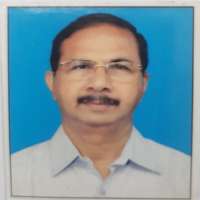
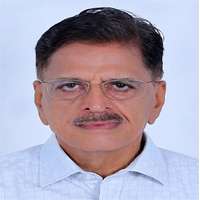
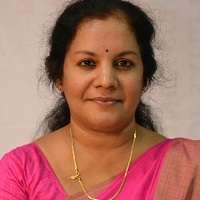
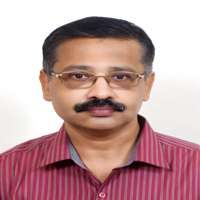
The department maintains two laboratories supporting first-year practical coursework, each built to APJ Abdul Kalam Technological University (KTU) requirements.
A 2,000 sq ft facility supporting practical coursework aligned with KTU requirements.
A 2,000 sq ft facility facilitating hands-on experiments for engineering chemistry coursework per university specifications.
|
Courses Handled |
||
|---|---|---|
|
PHT100 Engineering Physics A |
||
|
PHT110 Engineering Physics B |
||
|
PHL120 Engineering Physics Lab |
||
|
CYT100 Engineering Chemistry |
||
| CYL120 Engineering Chemistry Lab | ||
| HUN101 Life Skills | ||
| HUN102 Professional Communication | ||
| HUT200 Professional Ethics | ||
| HS200 Business Economics | ||
| MCN202 Constitution of India | ||